

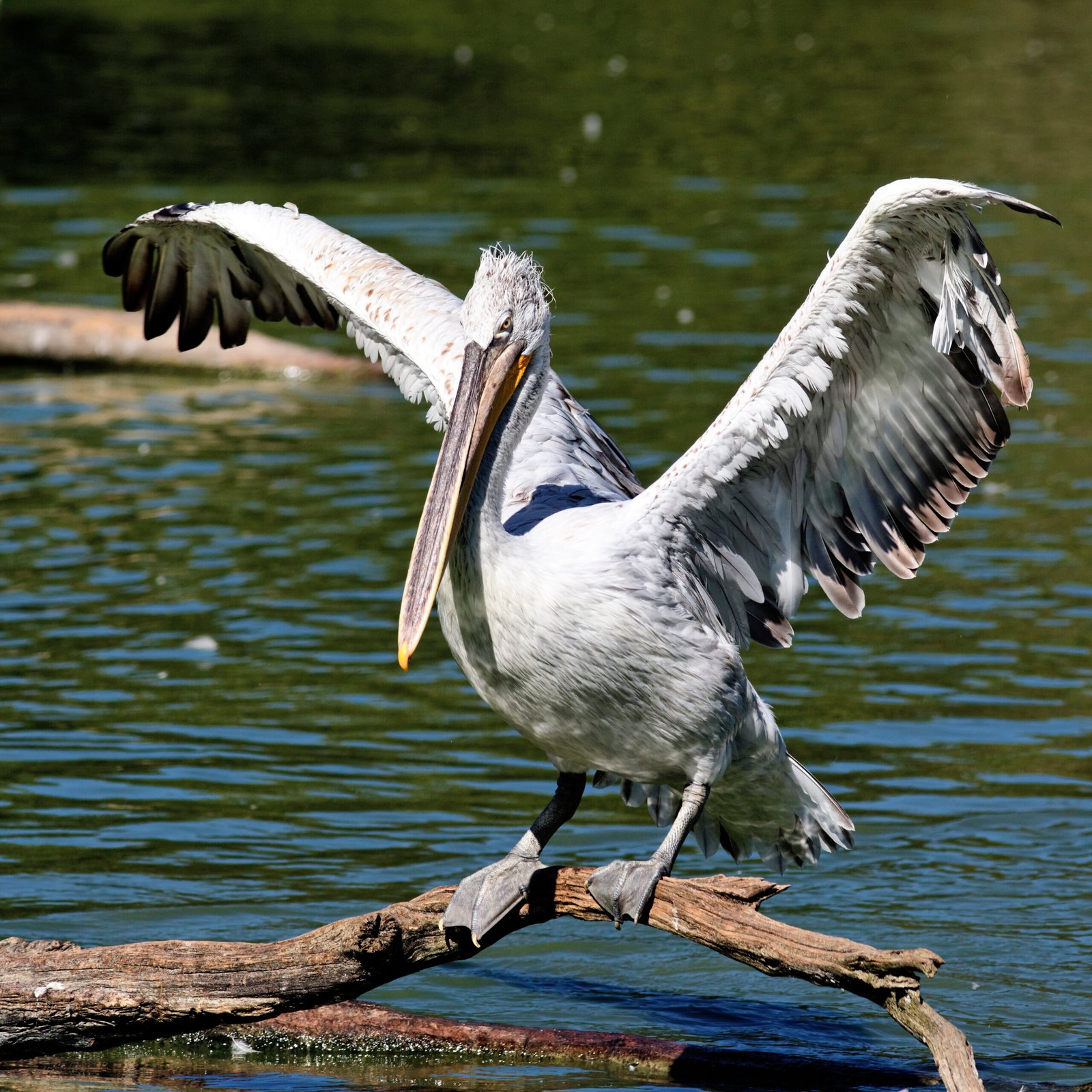
Pelicans are among the most fascinating and recognizable birds in the world, known for their large bills, graceful flight, and unique feeding behavior. Found across many parts of the globe, these remarkable waterbirds have adapted to a variety of environments, from coastal regions and estuaries to inland lakes and rivers. With their striking appearance and social nature, pelicans continue to capture the curiosity of birdwatchers, scientists, and nature lovers alike.
One of the most distinctive features of pelicans is their long bill and expandable throat pouch. This pouch is not used to store food for long periods, as many people assume, but rather as a highly efficient tool for catching fish. When hunting, a pelican dips its bill into the water, scooping up fish along with a large volume of water. It then drains the water before swallowing its catch. This method makes pelicans highly effective predators in aquatic ecosystems.
Pelicans are also impressive flyers. Despite their large size, they are capable of soaring effortlessly for long distances. They often take advantage of thermal air currents, gliding in wide circles high above the ground or water. Some species, such as the great white pelican, are known for their coordinated group flight patterns, forming elegant lines or V-shapes in the sky. This not only conserves energy but also demonstrates their strong social bonds.
Social behavior is another defining characteristic of pelicans. They are highly gregarious birds, often living, feeding, and nesting in large colonies. These colonies can include hundreds or even thousands of individuals. Living in groups provides several advantages, including increased protection from predators and improved efficiency when locating food. In some species, pelicans even hunt cooperatively, working together to herd fish into shallow waters where they are easier to catch.
Pelicans are also devoted parents. During the breeding season, they build nests in colonies, typically on the ground, in trees, or on rocky cliffs, depending on the species. Both parents share responsibilities when it comes to incubating eggs and feeding their young. Pelican chicks are born helpless and rely entirely on their parents for nourishment and protection. Watching a pelican parent carefully feed its chick is a powerful reminder of the nurturing side of these otherwise imposing birds.
There are several species of pelicans found around the world, each with its own unique traits and habitat preferences. For example, the brown pelican is commonly seen along coastlines and is famous for its dramatic plunge-diving technique, where it dives headfirst into the water from a height to catch fish. In contrast, other species prefer calmer inland waters and rely more on cooperative fishing methods. Despite these differences, all pelicans share common characteristics that make them easily recognizable.
Pelicans play an important role in maintaining the balance of aquatic ecosystems. By feeding primarily on fish, they help regulate fish populations and contribute to the overall health of their habitats. However, like many wildlife species, pelicans face threats from human activities. Pollution, habitat destruction, and climate change have all had an impact on pelican populations in various parts of the world. Conservation efforts, including habitat protection and environmental regulations, have been crucial in helping some species recover from decline.
In addition to their ecological importance, pelicans also hold cultural and symbolic significance in many societies. They have been featured in art, literature, and folklore for centuries, often symbolizing generosity, teamwork, and resilience. Their unique appearance and behavior make them a memorable part of the natural world.
In conclusion, pelicans are truly extraordinary birds that combine strength, elegance, and cooperation in their daily lives. From their specialized feeding techniques to their strong social structures, they offer a fascinating glimpse into the complexity of nature. Protecting these birds and their habitats ensures that future generations will continue to marvel at the beauty and uniqueness of pelicans.